
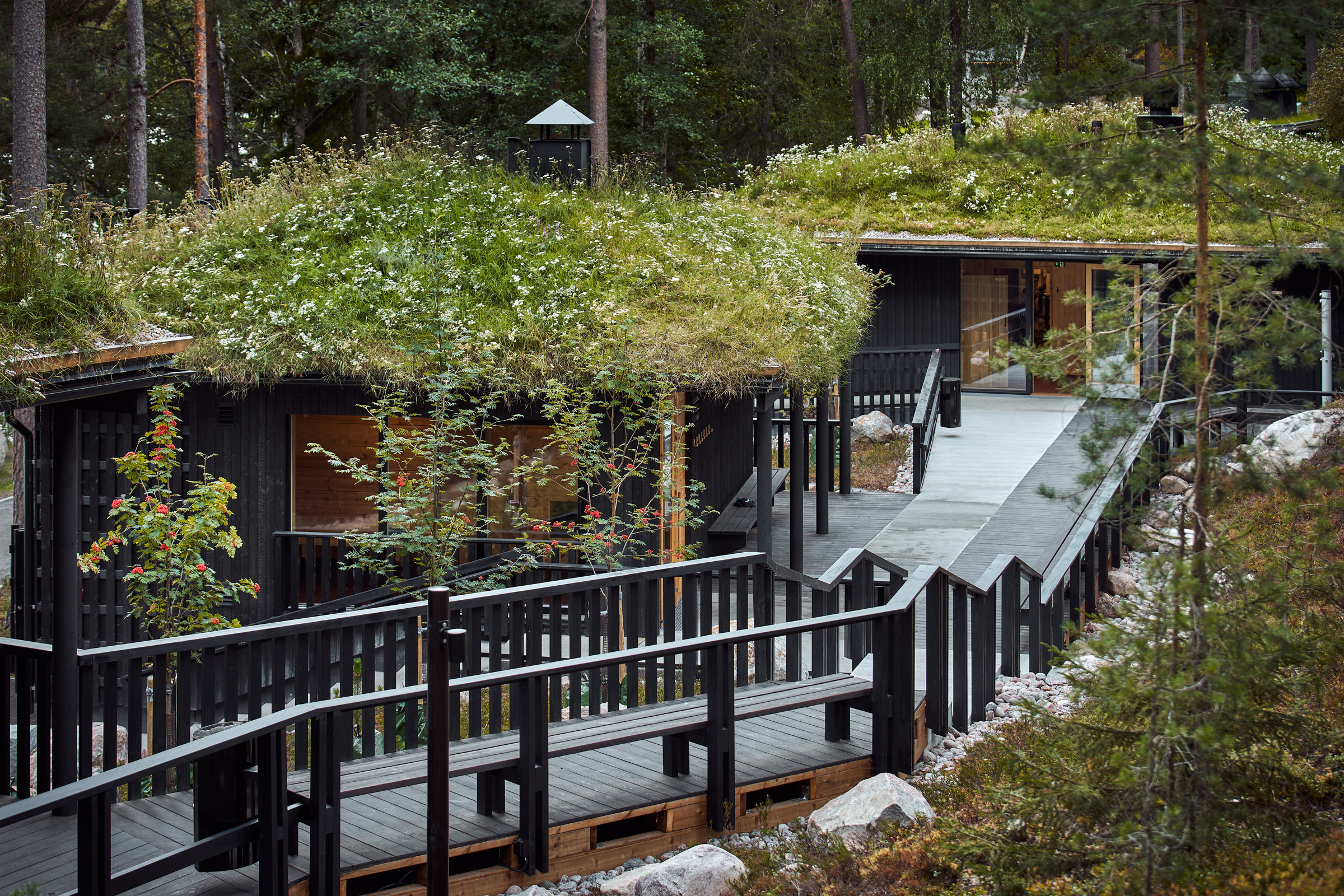
Charred wood decking – a guide to black, brown and grey deck boards
A dark deck is an architectural statement that doesn't follow trends – it defines them. Black, dark grey or deep brown decking boards create a coherent, contemporary look that feels entirely at home in the Nordic landscape. Charred wood is the ideal material for this purpose: the colour comes from the wood's own burned structure, not from a surface paint, and the result is a genuinely long-lasting deck for decades to come.
But what exactly is charred wood decking? How does it perform under the demands of outdoor use? Does the soot transfer to bare feet or white garden furniture? This article answers all of those questions.
Why does charred wood work for decking?
A deck is one of the most demanding environments for timber: sun, rain, snow, moisture and constant foot traffic all stress the surface. Conventional paint or oil provides protection, but the finish begins to peel, crack and need replacing every few years.
With charred wood, the protection lies in the structure, not on the surface. When a timber surface is charred, it undergoes a chemical change at the cellular level: hemicellulose – the part of the wood that attracts rot fungi and insects – breaks down and is replaced by dense carbon. The charred surface repels water and is naturally resistant to rot, blue-stain fungi and insect damage, with no biocides or toxic preservatives.
For decking, only Hiil's washed and brushed products are suitable – those whose surface has been levelled and oil-impregnated. A raw char surface would not withstand the repeated mechanical loads of a deck – snow-clearing, chairs, foot traffic and impact all demand a firmer surface. That firmness is achieved through brushing and oiling after charring.
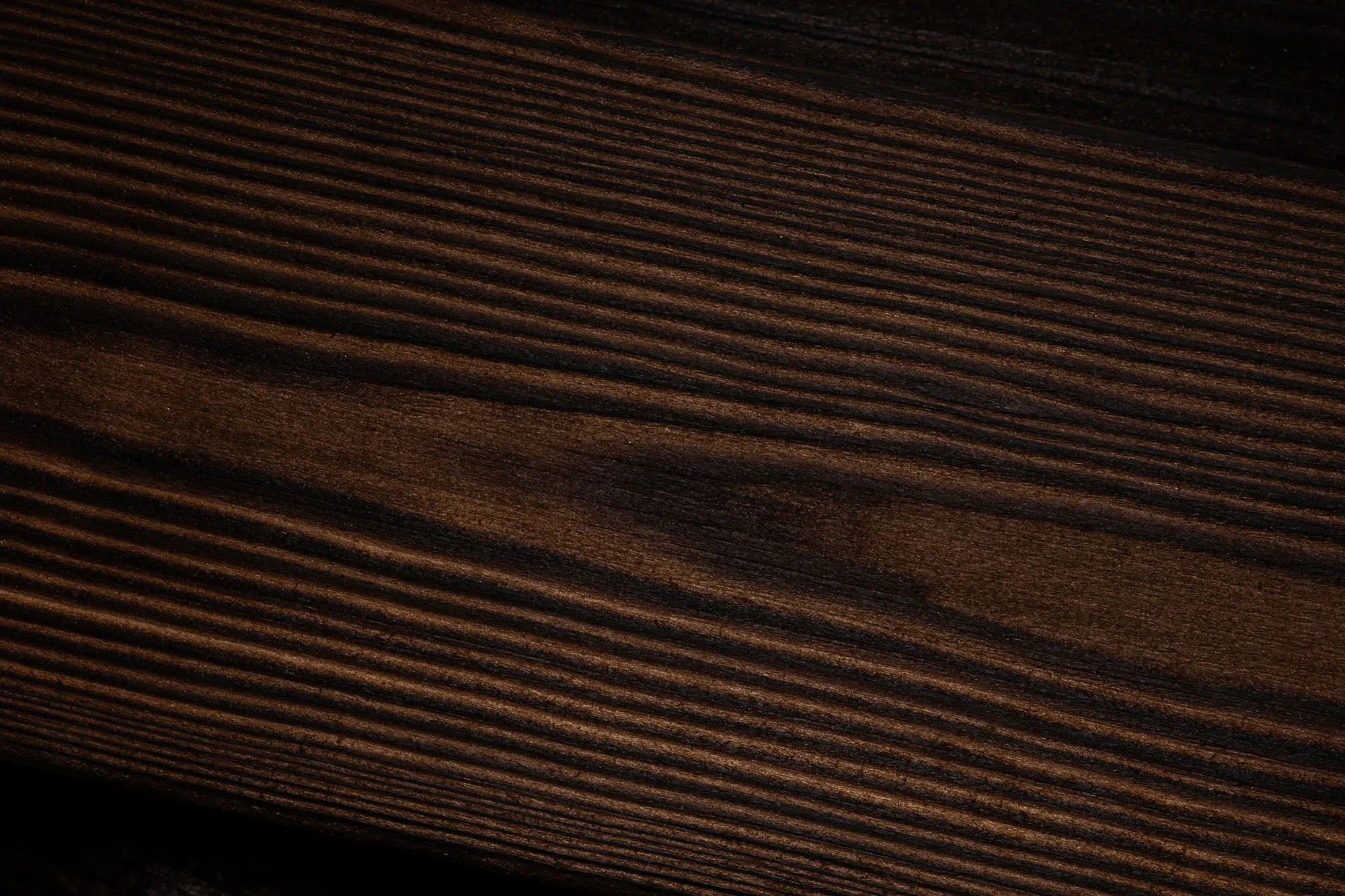
Black, brown or grey – colour options for charred decking
Charred wood is not just black. During the finishing stage, a colour pigment can be blended into the oil, producing different shades that are locked into the deck boards by the oil itself. Hiil's range of decking-suitable products offers four colour directions:
Black decking – Noki Noki is a deep, darkly burned brown on the edge of black. The colour pigment slows the natural weathering of the surface, keeping it dark considerably longer than an unpigmented product. The result is a rich, dark deck with depth and character.
Brown decking – Kaarna and Ruska Kaarna is a natural, warm brown without added colour pigment. It weathers gradually and evenly towards silver-grey over time. If you want the brown tone to last longer, Kaarna+ is the pigmented version, which weathers considerably more slowly.
Ruska introduces a reddish, autumnal tone to the deck. Its warm blend of red and brown works especially well alongside a sauna or natural stone surfaces.
Grey decking – Kelo Kelo captures the dignified grey of northern deadwood. The grey colour pigment guides weathering in a controlled direction towards silver-grey – the result is timeless and blends beautifully into its surroundings.
All four shades are the end product of the same charring, washing and brushing process. The only difference is the oil shade applied. Their durability and maintenance requirements are therefore identical.

Does the soot transfer to clothes or feet?
This is the most common question we hear when a customer considers charred decking. The answer depends on which product you're talking about.
A raw char surface does soot. If you touched freshly burned, untreated timber straight from the kiln, black carbon would transfer to your hands. We don't sell that surface.
Washed, brushed and oiled decking does not soot. In Hiil's decking products – Noki, Kelo, Kaarna and Ruska – the surface is first high-pressure washed to remove the loose char layer completely. It is then brushed smooth and finally impregnated with linseed oil. The oil binds the fine carbon particles remaining on the surface tightly into the wood.
The result is a surface you can walk on barefoot, set white garden furniture against, or let children play on without any concern about soot transfer.
The rule of thumb: any product that has gone through Hiil's oil impregnation process will not soot under normal use.
Factory impregnation – why it protects far better than hand-applied oil
The oil treatment is the heart of it all. It binds the fine carbon particles to the surface and protects the wood's cellular structure against moisture.
At Hiil's factory, the oil treatment is carried out under conditions that cannot be replicated at home. The board arrives at the oiling station still warm from the charring and brushing process, and heated oil is sprayed onto it from all sides. Into warm wood, warm oil penetrates deeply: the process drives up to five times more oil into the wood compared with hand-brushing at room temperature. The oil penetrates several millimetres into the timber, whereas oil applied by brush at home largely remains at the surface.
This deep impregnation means longer-lasting protection in practice, fewer maintenance oil applications and a firmer surface that doesn't transfer soot.
The linseed oil Hiil uses is specially refined: water and nutrients have been removed to prevent mould forming inside the wood. This is an important distinction from ordinary raw linseed oil. Linseed oil is also a natural, plant-based protective substance that has been granted a REACH exemption – it is not classified as a biocide requiring registration under chemical regulations. This makes charred wood decking a genuinely biocide-free choice from start to finish.
Maintaining charred wood decking
One of the most significant advantages of charred decking is its low maintenance requirements compared with conventionally painted or untreated oiled timber.
Cleaning Normal dirt and pollen come off the boards with water, a pH-neutral cleaning agent and a brush. A pressure washer is not recommended – it stresses the charred surface unnecessarily.
Oiling We recommend a maintenance oiling interval of approximately five years for decking. Thanks to the thorough factory impregnation, the board retains its protective properties considerably longer than a hand-oiled product.
All decking products weather over time under the influence of the sun's UV radiation. Pigmented products – Noki, Kelo, Kaarna+ and Ruska – retain their colour noticeably longer than the unpigmented Kaarna, which greys almost completely over time. If you want to preserve the original colour as long as possible, you can oil more frequently – it won't harm the surface; if anything, it helps.
Greying is a natural process in timber, not a fault in the product.
Maintenance oil Maintenance is carried out using the same specially refined linseed-based wood protection oil with which the product was treated at the factory. The oil is available directly from Hiil in the same shades as the original treatment. Apply the maintenance oil to a clean, dry, brushed surface in thin coats, wiping away any excess before it dries.
Durability of charred wood
All Hiil products come with a 10-year guarantee against rot when installed and maintained in accordance with the installation and maintenance guide. The guarantee does not cover natural phenomena such as colour changes, minor surface cracks or the natural moisture movement of timber.
The Natural Resources Institute Finland (Luke) has carried out a weathering test on charred timber whose results confirm strong weather resistance. The test was conducted on exterior cladding products (rain and UV exposure, but not mechanical loading), but the findings give a reliable indication of how charred surfaces behave on decks as well.
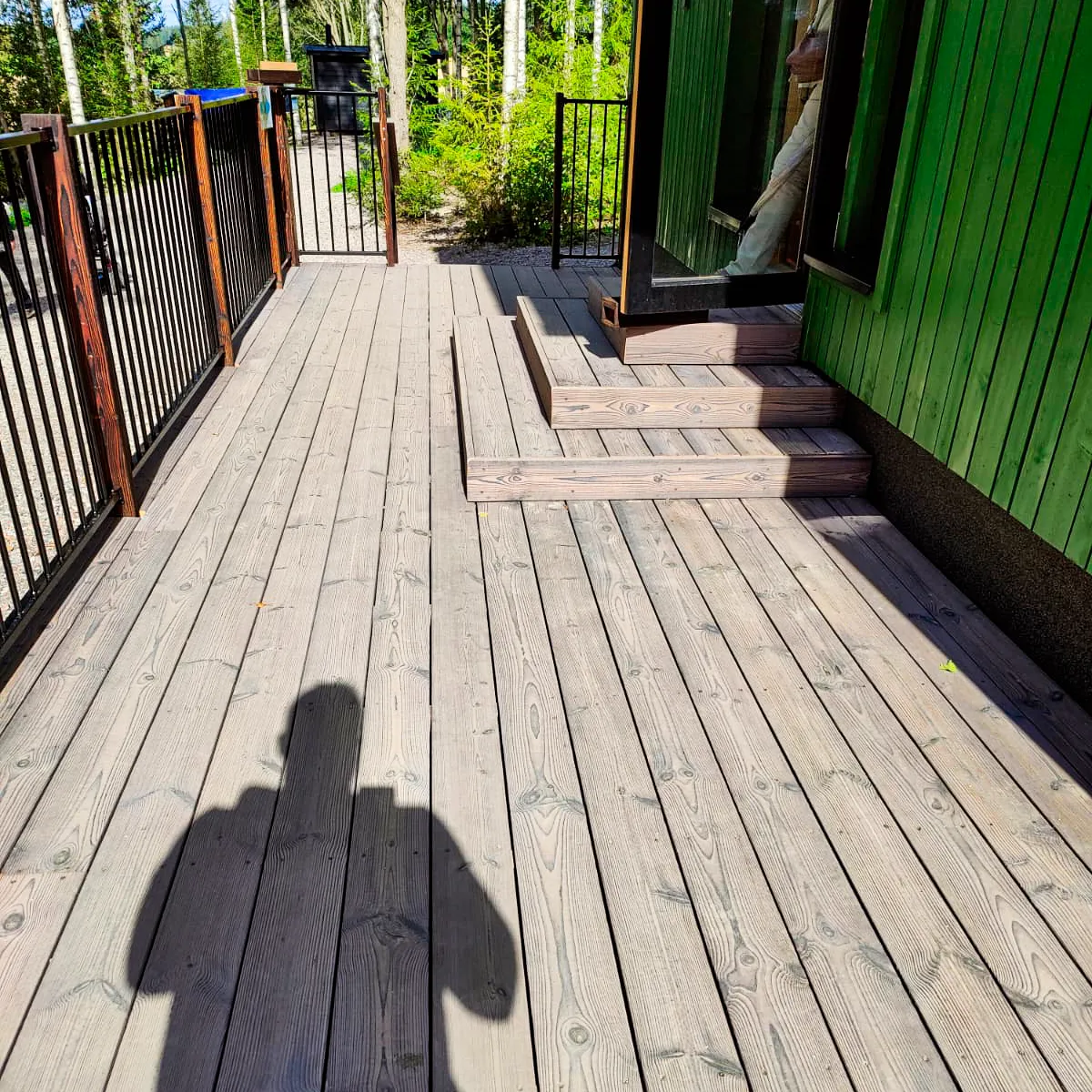
Installing charred wood decking
Dimensions and thicknesses
Charred decking is available in 28 mm or 45 mm thickness. The 28 mm board is ideal for deck surface use. The 45 mm board works both as a deck surface and as structural framing, reducing the need for multiple suppliers on a single project.
The raw timber arrives at the factory with sharp edges. Through charring and brushing, the board's edges round off and the grain pattern is beautifully revealed – the result is a natural, comfortable-to-touch deck board without sharp edges.
Gap and fixing
Charred decking is delivered dry, and may swell slightly outdoors as it acclimatises. For this reason, an 8 mm gap should be left between boards to allow for moisture movement and to ensure ventilation beneath the decking.
Boards are fixed from above or from the side with screws.
Cut end grain is particularly susceptible to moisture absorption, as timber absorbs moisture most readily along the grain from its ends. All cut surfaces must be treated with oil immediately after cutting. The same specially refined linseed oil that Hiil sells alongside deliveries is ideal for this.
Detailed fixing and installation instructions are available in the installation guide.
Frequently asked questions
What is charred wood decking? Charred wood decking is pine timber whose surface has been protected by burning – charring. In the process, the wood's surface layer is converted to carbon, which repels water and resists rot without chemical biocides. For decking, the surface is washed, brushed and oil-impregnated, giving a smooth, attractive and low-maintenance deck board.
Does charred decking soot? Not when we're talking about Hiil's decking products. A washed, brushed and factory-impregnated surface does not soot under normal use. The loose char layer is removed during washing, and the fine residual carbon is bound firmly into the wood by the oil.
Is there a guarantee on charred decking? Yes. All our products carry a 10-year guarantee against rot, provided they have been installed and maintained according to our guidelines. The guarantee does not cover natural phenomena such as colour changes, minor surface cracks or the natural moisture movement of timber.
How often does charred decking need to be oiled? We recommend a maintenance interval of approximately 5 years. Thanks to the deep factory impregnation, the product retains its protective properties considerably longer than a hand-oiled board. Those wanting to maintain colour can oil more frequently – every three years, for example.
How do you clean charred decking? Light brushing and washing with water and a pH-neutral cleaning agent is sufficient for normal upkeep. A pressure washer is not recommended, as it stresses the surface unnecessarily.
Which decking suits a black deck? Noki is the best choice for a black deck. It is charred, washed, brushed and pigmented with black pigment that slows greying. The result is a deep, very dark brown deck with a characterful, textured surface.
Which decking suits a brown deck? Kaarna+ is the natural choice. Kaarna+ retains the brown shade longer thanks to its pigment. Alternatively, Kaarna with clear oil is a deep brown in its early years, gradually shifting towards grey as it weathers.
Can I install charred decking myself? Yes. Installation is straightforward with standard woodworking tools. The most important things to remember are: treat all cut end grain with oil immediately after cutting, leave 8 mm gaps between boards, and ensure adequate ventilation beneath the deck. Detailed instructions are in the installation guide.