
Sustainability
Charred wood is in itself a responsible choice: natural, long-lasting, and finished with pure linseed oil only – without added biocides or solvents. At Hiil we go further: our raw materials come partly from the circular economy, our energy is renewable, and our production process is designed to minimise waste and emissions.
Raw materials and circular economy
PEFC certified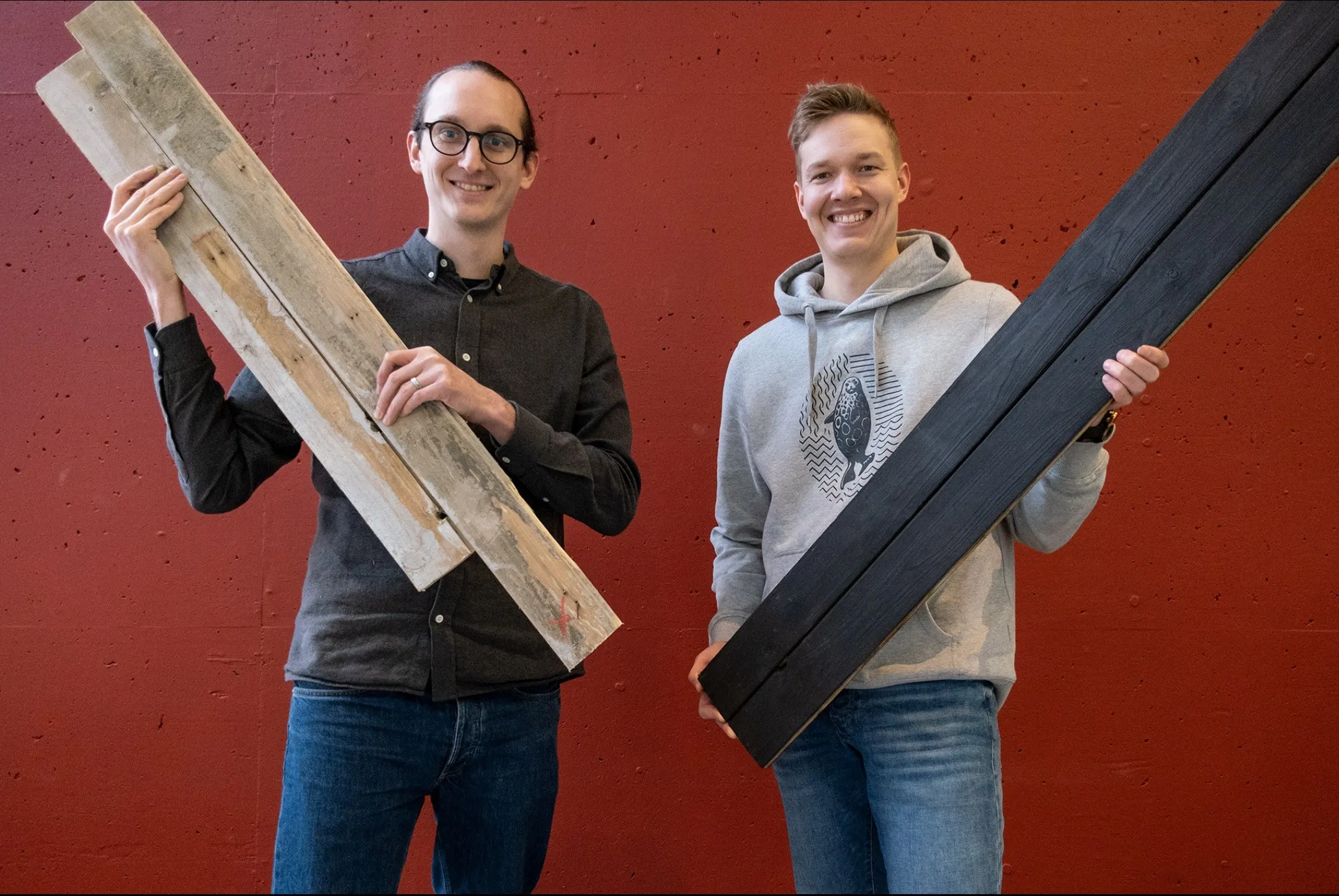
Sawmill side streams
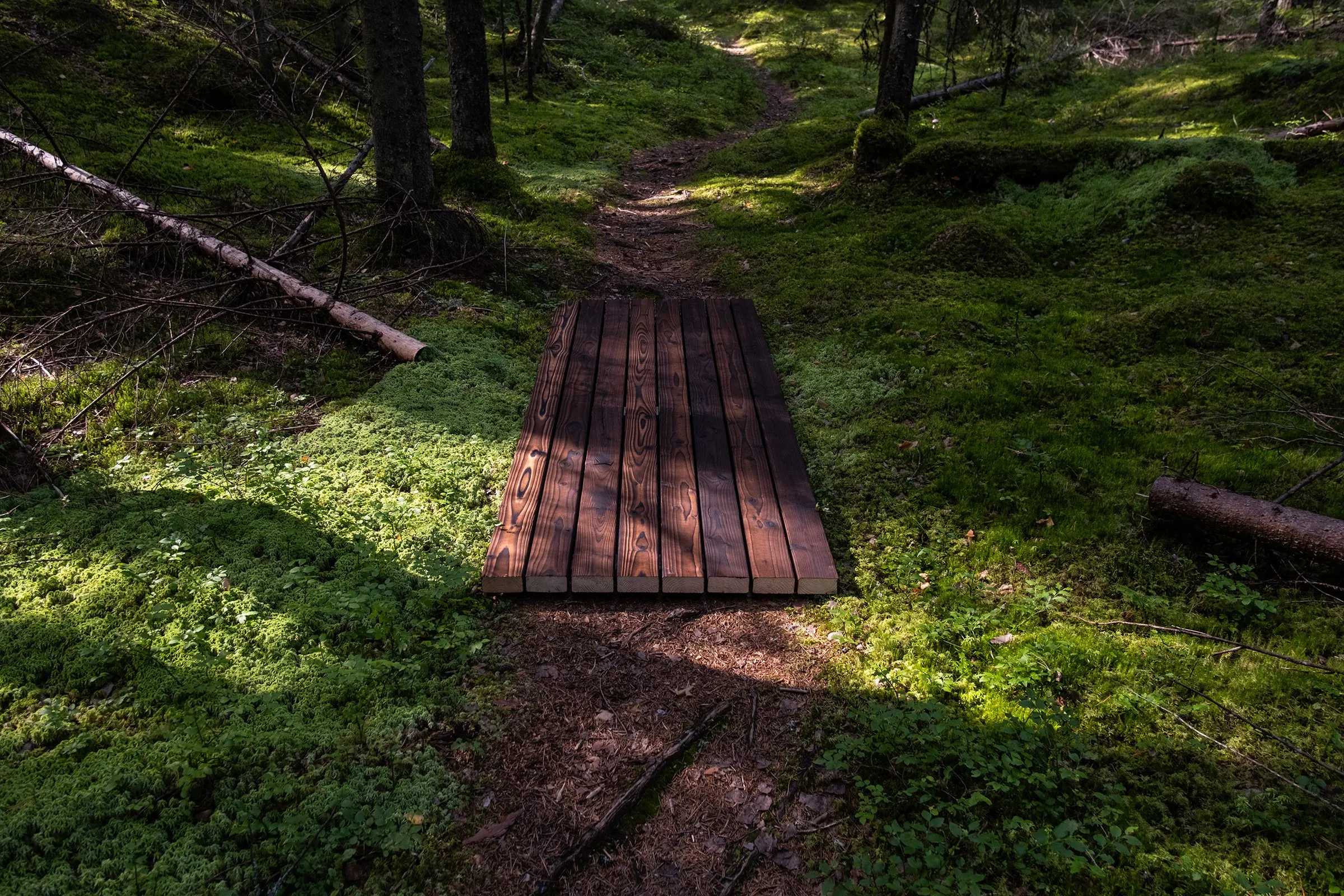
We use sawmill side streams – timber in grade 5–7 that has not traditionally been used in long-term construction. The material has aesthetic defects that we correct by charring. In this way, surplus wood is turned into a high-quality, long-lasting product.
Construction industry side streams
Using construction industry waste was the starting point for Hiil. We work actively with players in the sector: trial batches and smaller projects have been completed successfully, and our aim is to create a larger production scale for recycled construction materials.
Using sawdust
Sawdust from planing is used for energy at a combustion plant in Kontiolahti, only 5.1 km away.
PEFC-certified raw materials
We are a PEFC-certified operator and use wood from PEFC-certified sources as our raw material. You can view our certificate here.
Technology and production
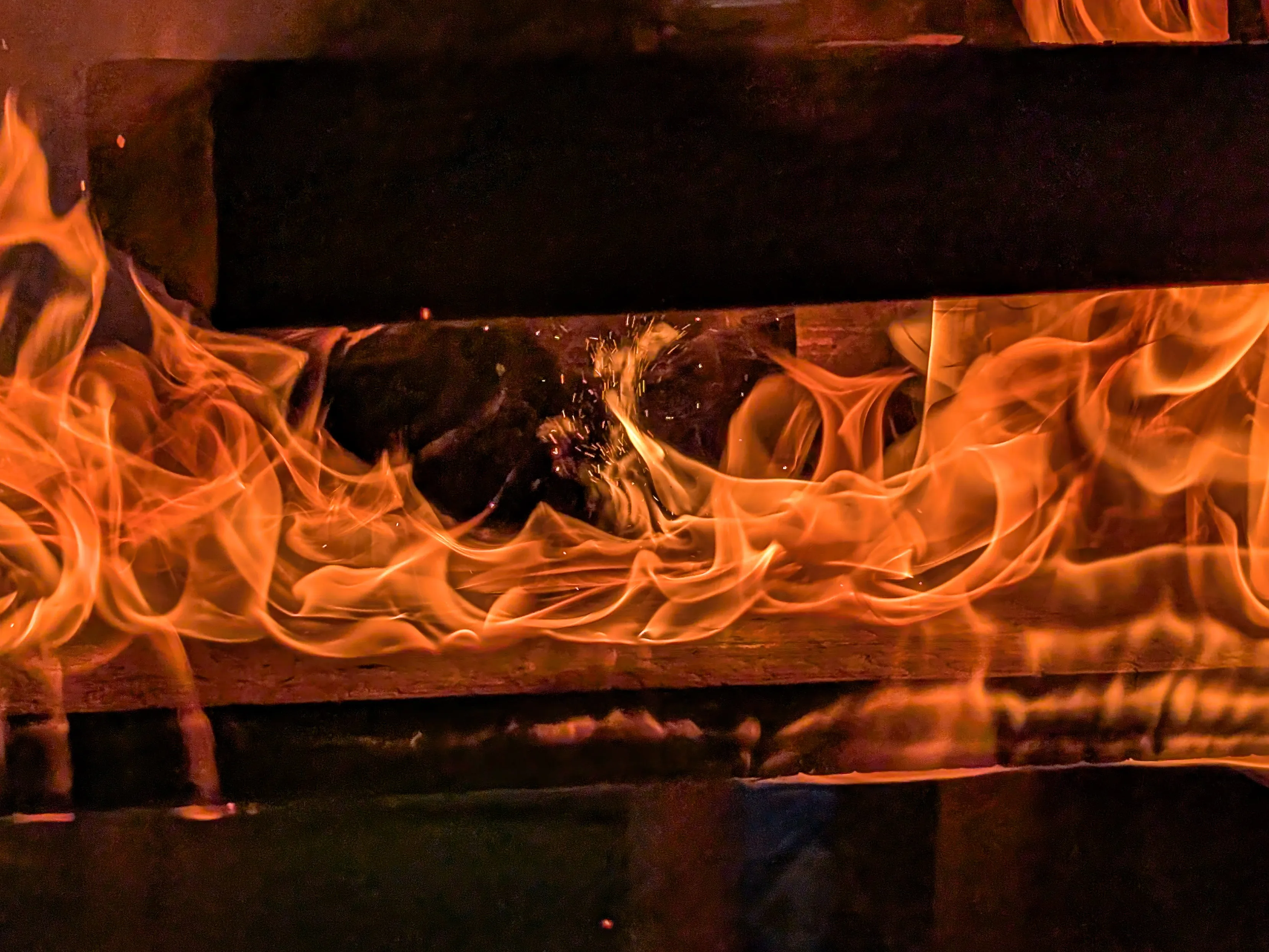
Our charring system uses the wood’s own energy. No external energy is needed for the charring itself except a small amount of electricity for ignition. The system produces many times more energy than the electricity consumed. The technology has been developed and manufactured in Finland and is being patented.
Using heat energy
Heat released in the charring process is used in other stages of factory production and for heating the plant. Surplus heat can be converted to electricity or sold to the local district heating network when needed.
Water circulation
Wood is quenched with water or pressure-washed in a closed water recirculation system. A gravity filtration system separates biochar from the water. The same water circulates in the system for a long time. Water consumption is only about 4 litres per hour.
Hiil production side streams
Biochar
Char that comes off the surface of charred wood is collected. Tests show it is suitable as a soil improvement product. Biochar is a commercially viable side stream for us.
Production waste
Timber that does not meet criteria in the early stage of the charring process is used either in the plant’s own projects or production waste wood is turned into biochar at a local refinery.
Fleet
Most of our equipment is electric (e.g. stacking trolleys and wheel loaders). One diesel forklift is still used for the heaviest lifts that electric loaders cannot yet handle. New technology will allow it to be replaced in the near future.
Energy
Electricity
The electricity we use in production is locally produced hydro power. Our site has a 20 kW solar installation that supplies 17 % of the premises’ electricity. The solar mounting structures are made from recycled wood.
Heating
The workshop and offices are heated with energy-efficient ground-source heat. The factory building is also heated with heat from our own production and district heating.
Carbon footprint
Hiil products have a minimal carbon footprint. The single largest component, 99 % of product emissions, is linseed oil used in surface treatment. The charring process itself (brushing, washing, charring) runs on electric motors or the wood’s own energy, which is renewable.
Reference value using virgin timber.
Side stream from sawmill industry, grade 5–7.
Reclaimed timber from construction sites.
Charring without surface treatment (oil treatment adds to emissions).
Source: Impact of manufacturing process and raw material on the emissions of charred wood (Valmistusprosessin ja raaka-aineen vaikutus hiilletyn puun päästövaikutuksiin), Kainulainen, Karelia UAS, 2025. The document is available only in Finnish.
Premises and circular economy
The factory extension was built in 2017 on circular economy principles. Materials from the former Prisma green yard were reused to the maximum: concrete pillars, glulam beams, load-bearing roof sheets, sandwich plinth elements, and concrete bases.
The only new materials in the extension were wall elements, floor concrete, reinforcement, and the heating system. This approach significantly reduced the need for new material and construction waste, and lowered building costs.
- Concrete pillars
- Glulam beams
- Load-bearing roof sheets
- Sandwich plinth elements
- Concrete bases
Packaging and materials
Packaging
Products are packed in plastic wrap made from recycled plastic, 89 % of which is recycled (the rest is colour and UV stabilisers).
Marketing materials
Brochures, business cards, and print products are made mainly from recycled materials (e.g. cardboard and paper). Company promotional products such as hoodies are made from recycled materials (e.g. Pure Waste).
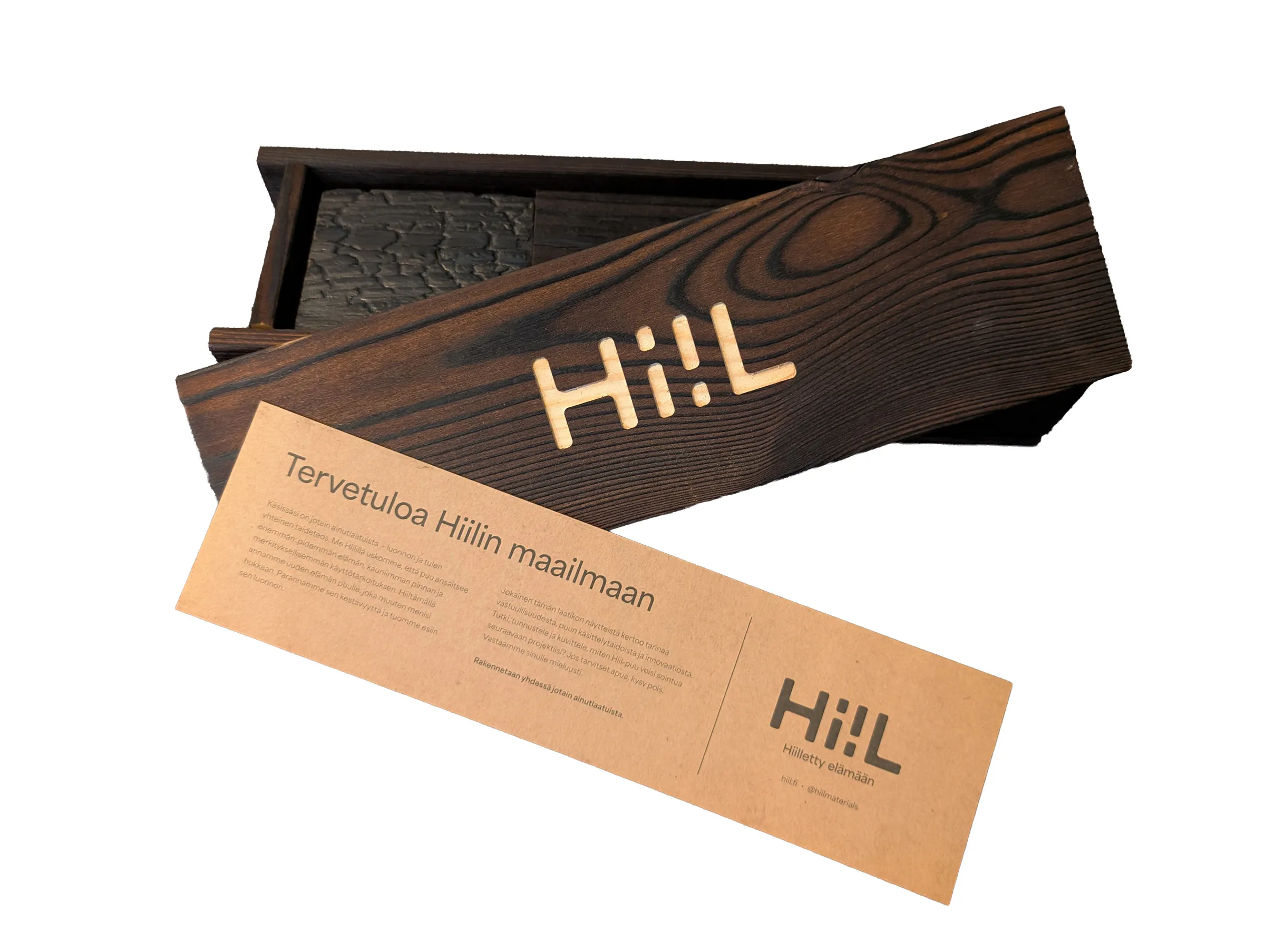
Sample boxes
In our sample boxes we use our own production and make them from charred Circuwood® material. The pieces contained in the sample boxes are also made of Circuwood®. The cardboard used in the sample box info labels is recycled.