
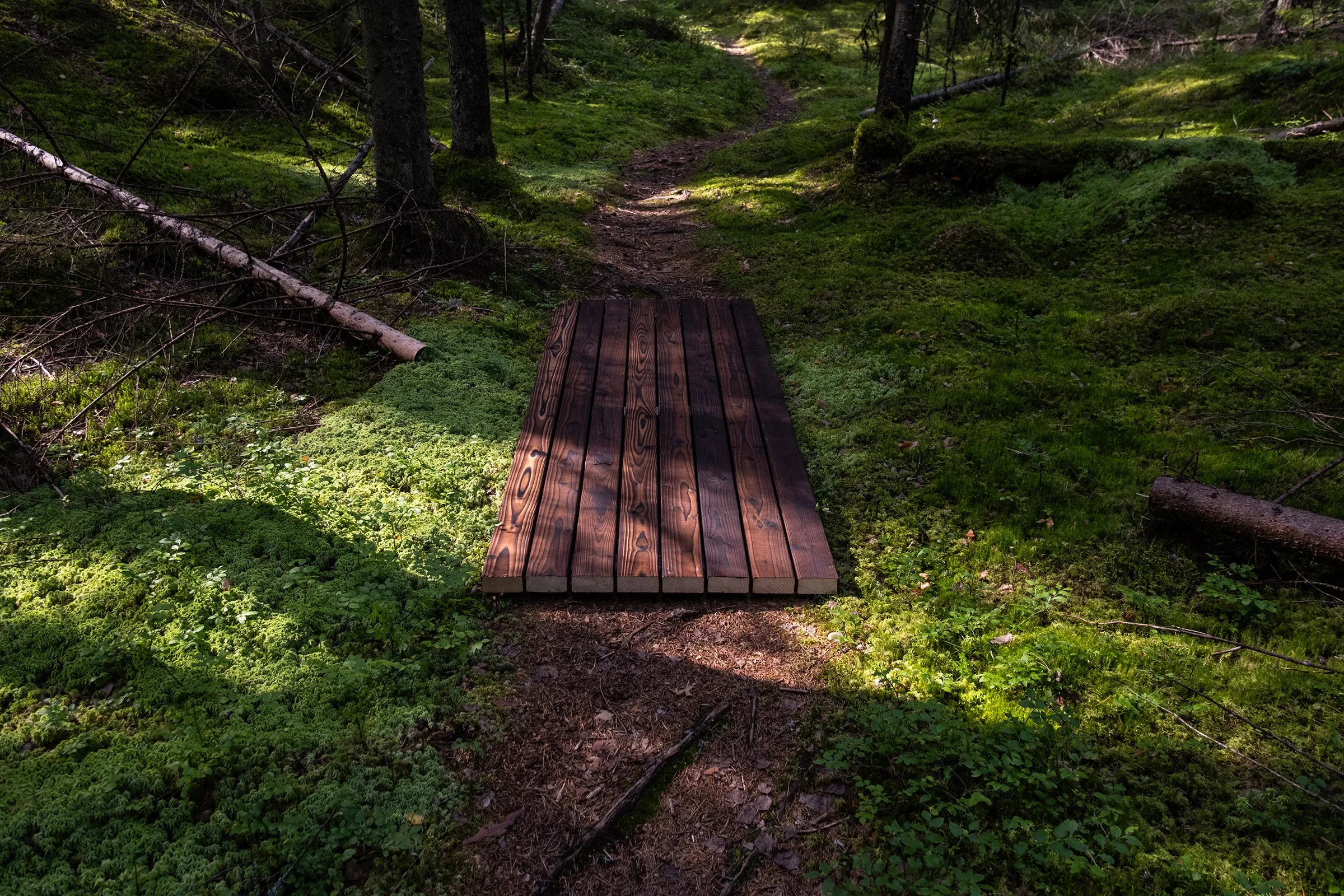
CircuWood™ – from waste wood to lasting value
The Hiil story begins with the circular economy — with the idea that wood already produced once deserves a long-lasting, high-value application, preferably in building surfaces. CircuWood™ is Hiil's way of turning industrial side streams and otherwise wasted wood into technically sound, visually striking and durable cladding products.
Where did the idea of using CircuWood come from?
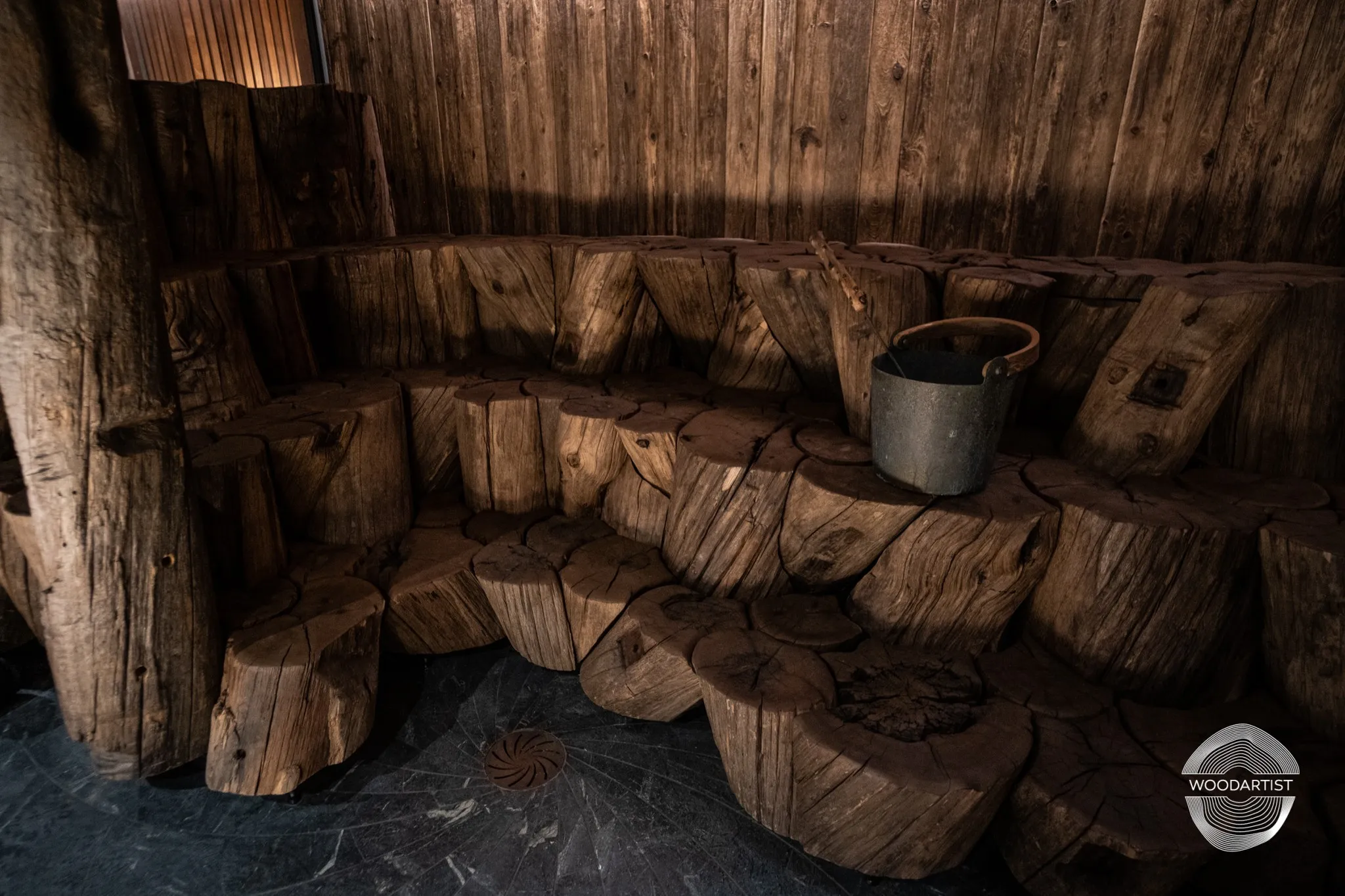
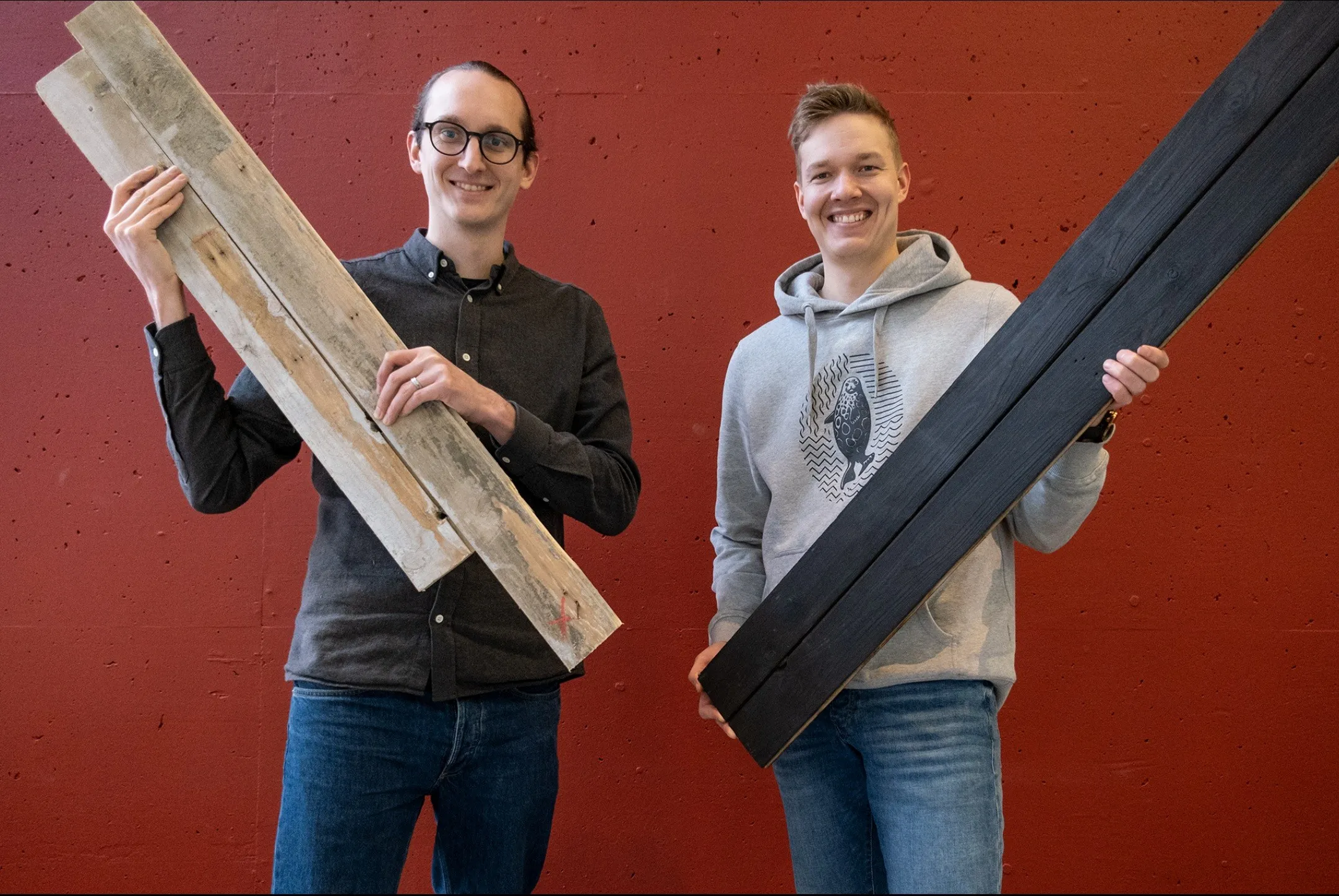
Hiil's founders Miikka and Joona previously ran a company called Puuartisti, which made extensive use of wood with a history behind it — storm-felled trees, timber lifted from bogs, and sunken logs. Rather than calling it circular economy, they spoke of the stories the wood carries. This mindset also led to the first hands-on charring experiment, when circular economy operator Spolia Design asked Puuartisti for ideas on how to reuse timber from bridge construction sites.
The problem with bridge-site timber was that it contained concrete, sand, dirt, metal and surface damage. It could not be processed with any tools before thorough cleaning. In the first trial, the concrete-saturated surface was burned and then the concrete–char mix was removed with a pressure washer. A few millimetres of the surface peeled away, leaving usable wood underneath. The question arose: could this process be turned into a scalable business? That development work gave birth to Hiil — and to CircuWood™.
What CircuWood™ means at Hiil
CircuWood™ is a trademark of Hiil. It refers to raw material that has previously been in other use, or that would otherwise end up in short-cycle applications or be burned for energy.
CircuWood™ is not a single wood species or a single grade. It is a sourcing model and a starting point for raw materials. Wood can qualify as CircuWood if it has, for example, blue stain (an aesthetic defect) or an excessively knotty profile (a structural defect). Aesthetic defects are effectively managed through charring, while structural issues — such as those affecting bending strength — are irrelevant in cladding products.
Defining the terms: side-stream wood and waste wood
Side-stream wood
Side-stream wood is generated in the sawmill and planing industry when part of the production is set aside after grading — due to knot quality, colour defects, surface damage or failure to meet structural strength classes. Some of this wood ends up in the packaging industry or other short-cycle uses, but a large share is burned for energy.
From Hiil's perspective, side-stream wood is a consistent and predictable raw-material flow that can be redirected into long-lasting building products.
Waste wood
Waste wood is associated with the construction industry and refers to timber classified as waste — for instance on a building site or during demolition. It may contain dirt, concrete, metal, fasteners and variable quality. It is an interesting raw-material flow, but logistically and from a quality-control standpoint more demanding.
Where this article refers to demolition wood, it means material from the construction-industry stream — in practice, raw material akin to waste wood.
Hiil's two circular-economy streams: CircuWood and demolition wood
Hiil has developed its raw-material chains in two directions.
1) CircuWood — side-stream wood from sawmills and planing mills
Currently, CircuWood™ products are made from sawmill industry side streams. Hiil has agreements with sawmills and planing mills within roughly 200 km of its factory. The shorter distance supports security of supply and reduces transport emissions.
2) Demolition-wood scenario — construction-industry stream
Demolition wood from the construction industry holds great potential, but the logistical distances are often longer and the chain involves more variables. Transport and handling can add to both emissions and costs. In practice, the overall picture may end up close to the CircuWood level once logistics and sorting are taken into account. This adds flexibility to sourcing but requires a well-functioning supply chain.
The carbon footprint of CircuWood
A study by Karelia University of Applied Sciences (Kainulainen 2025) compared Hiil's products in terms of fossil emissions (kg CO₂e per kg of finished product). The results show that CircuWood and the demolition-wood scenario are virtually on par, and both are significantly lower than the virgin-wood alternative.
Fossil emissions reported in the study:
- Hiil, virgin wood: 0.201 kg CO₂e/kg
- Hiil, demolition wood: 0.115 kg CO₂e/kg
- Hiil, CircuWood: 0.112 kg CO₂e/kg
The differences are especially pronounced in the raw-material phase (kg CO₂e/m³):
- Virgin raw material: 39 kg CO₂e/m³
- Demolition wood: 5 kg CO₂e/m³
- CircuWood: 4.2 kg CO₂e/m³
The raw-material-phase comparison demonstrates that circular-economy-based alternatives have substantially lower emissions than virgin raw material. This is CircuWood's core advantage: the same end use in building products, but a significantly lighter footprint at the raw-material stage.
Why CircuWood should be made into cladding products
When side-stream wood or demolition-site timber is directed into long-lasting surfaces, the wood stays in use for longer. At the same time, the carbon stored in the wood remains locked in the product, and the built environment serves as a carbon store for an extended period.
CircuWood™ is also resource efficiency in practice:
- a better yield from sawmill production
- less wood diverted to energy burning
- more long-lasting wood surfaces for construction
What is manufactured from CircuWood today
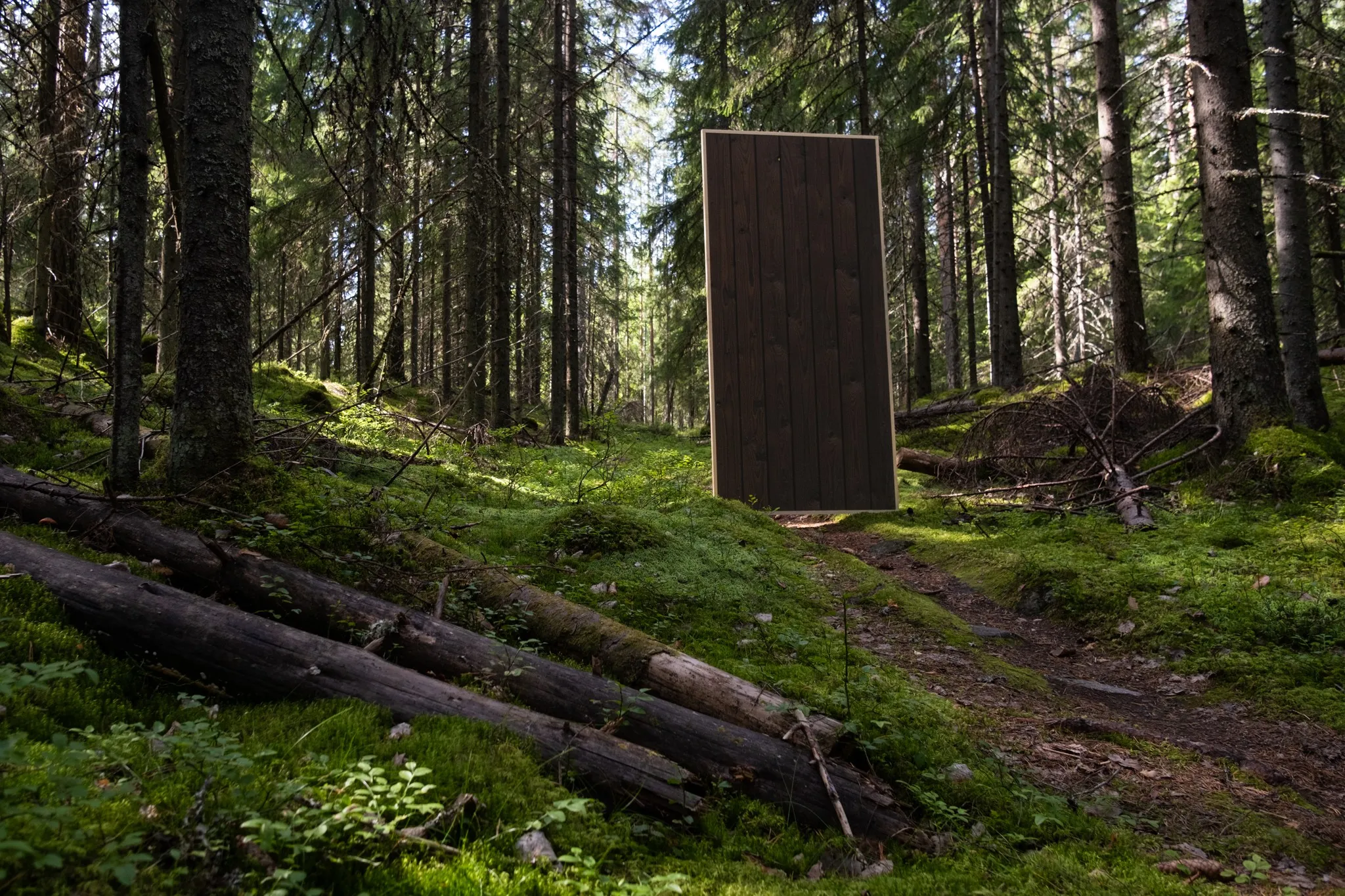
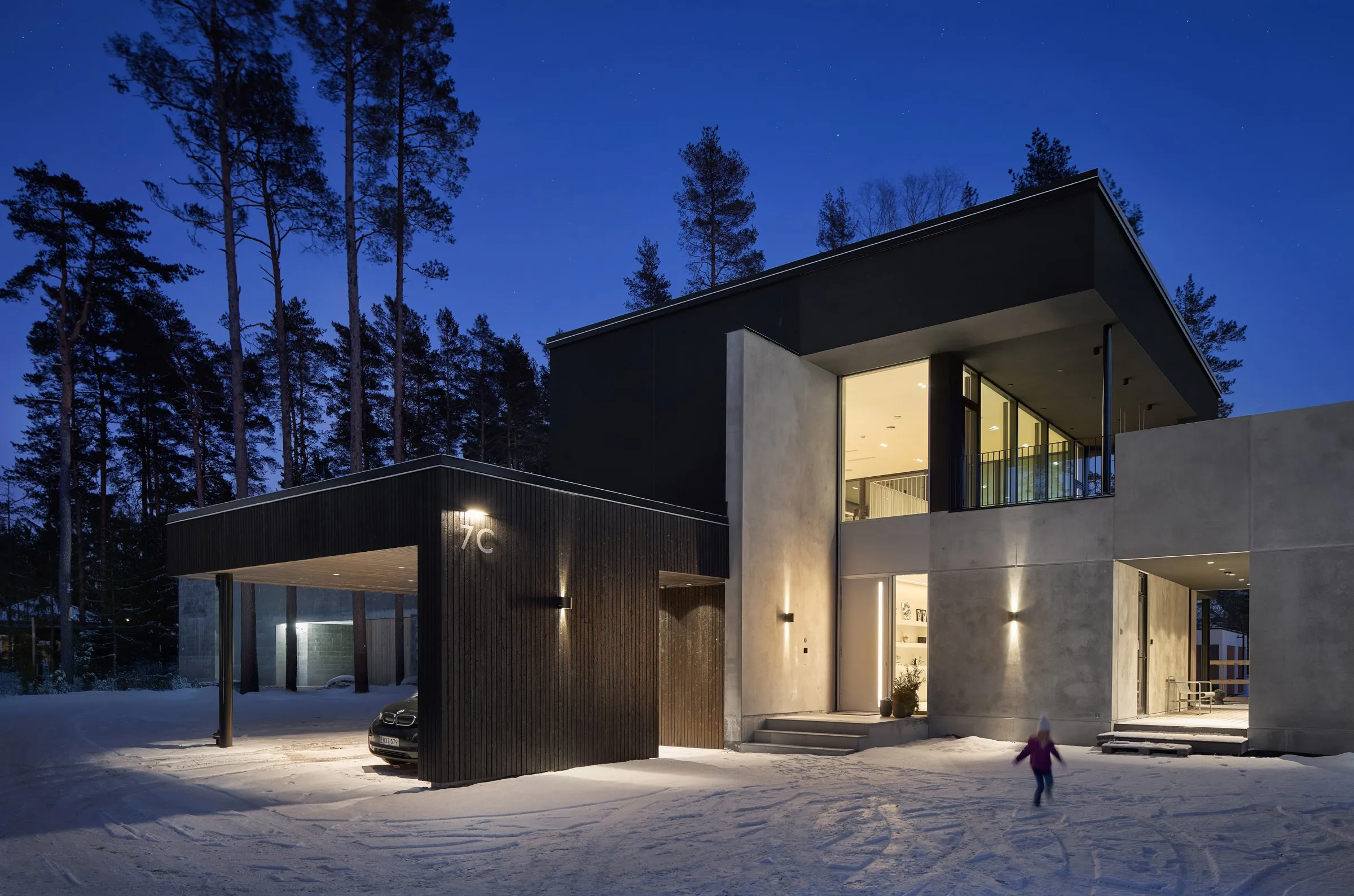
Currently, CircuWood utilises sawmill industry side streams, which are turned into wall cladding products for both exterior and interior use.
Source
Kainulainen, J. (2025). Valmistusprosessin ja raaka aineen vaikutus hiilletyn puun päästövaikutuksiin. Karelia ammattikorkeakoulu. Theseus: https://www.theseus.fi/handle/10024/904230